5 books that made me a better facilitator
Some are the usual suspects. Two you have probably never seen on a list like this, and one of them is not about facilitation at all.

The cheapest way to get better at this job is still reading.
No course, no certification, no conference ticket. A book, a walk to listen to it on, and one idea you steal and try in the room next week.
Five books changed how I design and run sessions. Two of them you’ve probably never seen on a list like this and they’re not about facilitation at all.
This is for you whether you facilitate for a living or simply want the meetings and brainstorming sessions you run to be worth the time people spend in them. Most of what’s in these books applies to both.
For each one you get the short version: what the book is about, and the one thing I actually took from it and still use. Enough to decide which is worth your next few evenings.
And if you would rather watch than read, I recorded the whole thing as an episode of the podcast. Same books, more stories.
1. Sprint
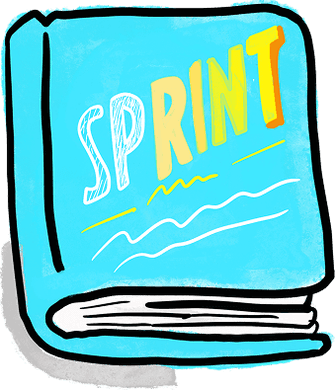
The obvious one, and the one I owe the most to. I started facilitating by running a design sprint, so this book is where the whole thing began for me.
What I love about it is that it is not a theory of facilitation. It is a recipe. Five days, one big problem, tested solution at the end. Follow the steps.
That matters more than it sounds when you are starting. You do not need to be a good cook to put a good meal on the table. Follow a recipe that works and you get there. Jake Knapp and John Zeratsky tested theirs enough times that you can trust it.
There are far more takeaways in here than I can fit in a section. And even though it is written as a recipe, the pieces come apart. You can lift almost any of them into a meeting or a workshop of your own: Expert Interviews instead of a long boring presentation, 4-steps sketch a smarter way to structure a brainstorm, and a dozen small facilitation moves hidden inside the instructions.
I will stick to the two I use most.
Moving forward matters more than being right.
The lesson I took from Sprint
I could give you three days on one question. Instead you get thirty minutes, because there is no real correlation between hours spent on an idea and how good it turns out.
Take a step, check it, take another. This is also why the Time Timer became the facilitator's timer. The book tells you this activity takes twenty minutes, and the timer makes that visible to the room.
The second is together alone. You ask a question and instead of one person answering out loud, everyone writes on sticky notes.
It is the most inclusive move I know. It is not just the extroverts. It is not just the boss. Everyone thinks, everyone contributes. Nobody gets to pitch, so an idea rises on its own quality rather than on how well it was sold. And because you cannot explain it afterwards, you have to think it through and package it clearly on the note.
You hired good people. If you never make it possible for the quiet ones to contribute, you are wasting them.
2. Creative Confidence
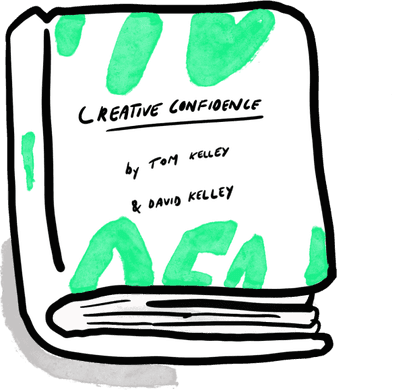
You are in a workshop. You ask people to sketch something, or to come up with ideas, and someone says it: "Yeah, but I'm not the creative type."
It has happened to me hundreds of times. For years I had no good answer. This book gave me one.
Creativity is a muscle. Everyone used it as a child. You drew, you invented games, you made things up. Then you became an adult and stopped, so the muscle went out of shape. It did not disappear.
That alone is useful in the room. When someone tells you they are not creative, you can tell them honestly that they are, and that getting them there is your job, not theirs.
Four more things I took from it.
The biggest obstacle is the fear of being judged. People hold back their wildest ideas because of what their colleagues will think. This is why a safe room is not a nice extra. One concrete move: when you run together alone, anonymise it. Same colour sticky notes, same Sharpie for everyone. Now nobody can trace who wrote what. Small thing, real effect.
Creativity needs a warm-up. You would not ask someone who has not run in ten years to do a marathon. You would build up. Same in a workshop. Do not open with the big brainstorm.
The Kelley brothers, who founded IDEO, took this from research on treating phobias. The fastest way to cure a fear of snakes is not to hand someone a snake. It is a sequence: there is a snake in the next room. Now it is in this room. Now it is on the table. Now touch it. Step by step, and the fear is gone.
Look at the four step sketch in Sprint and you see the same logic. Write down what you know. Doodle rough ideas. Crazy eights. Only then the solution sketch, which is the only one that counts. Everything before it exists to get the brain ready.
Inspiration beats invention. If the problem is hard, do not ask people to conjure something from nothing. Show them what other companies and other industries did with a similar challenge. Building a travel app? Look at how Airbnb lets you explore and save what you like. Someone else already did the hard part somewhere else.
Good ideas arrive when people are relaxed. This is the shower effect. Your body relaxes, you think you have stopped working on the problem, and your brain keeps chewing on it in the background.
So build that in. On a multi-day workshop I leave the ideas unfinished at the end of day one and give them more time the next morning. Something always arrives overnight. On a single day, the breaks do the same job, which is why I push people to actually stop during them instead of opening their laptops.
And look at the problem from another angle. Surgeons were exhausted after long procedures. Everyone assumed the tools were too heavy, and nobody could make them lighter. Someone reframed it: how might we make the scalpel sit better in the hand? That question produced new shapes and solved it. The tool they ended up with was heavier, and less tiring.
3. The Workshopper Playbook
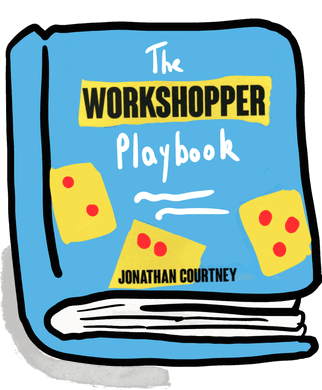
A two hour read, and free online. Small book, two big things in it.
The first is the four Cs. Jonathan Courtney's argument is that every strong workshop has the same underlying structure: collect, choose, create, commit.
Collect the information you need to understand the problem. Choose what you are actually solving, because you have three hours and not three weeks. Create the ideas. Then commit.
That last one is where most workshops fall down. Ideas feel like an ending, so people stop there. But the room empties, everyone goes back to their inbox, and the sticky notes die. Commit is where you decide what happens next, who does it, and by when. Without it you had a nice afternoon.
I use this structure in my own work, including the framework inside the Workshop Deck, with two additions: connection at the start and celebration at the end. Six Cs.
Connection because a room that has not warmed up will not collect much worth choosing. Celebration because people should leave knowing they built something, not just that the time is up.
I go through the full framework in this video.
The second thing is the Lightning Decision Jam, a problem solving recipe that runs in sixty to ninety minutes. It has flaws. It also does a decent job, it fits in the time people will actually give you, and when you are starting out, having a recipe you trust removes the doubt about whether you picked the right activities.
4. The Power of Moments
Another obvious one, and it changed more than my workshops. It changed how I deal with clients too.
The finding is that people remember three things from an experience: the beginning, the end, and the peaks. The rest blurs.
The Disney example makes it concrete. Rate every moment of a day at the park and you get about a six out of ten. The entrance is a nine, because you come through a dark tunnel and the castle appears, and it looks enormous on purpose. Twelve euros for a Coke is a three. Two hours queueing for Space Mountain is a two. The ride itself is a nine.
Average it and you have a six. Ask people the next day and they say nine.
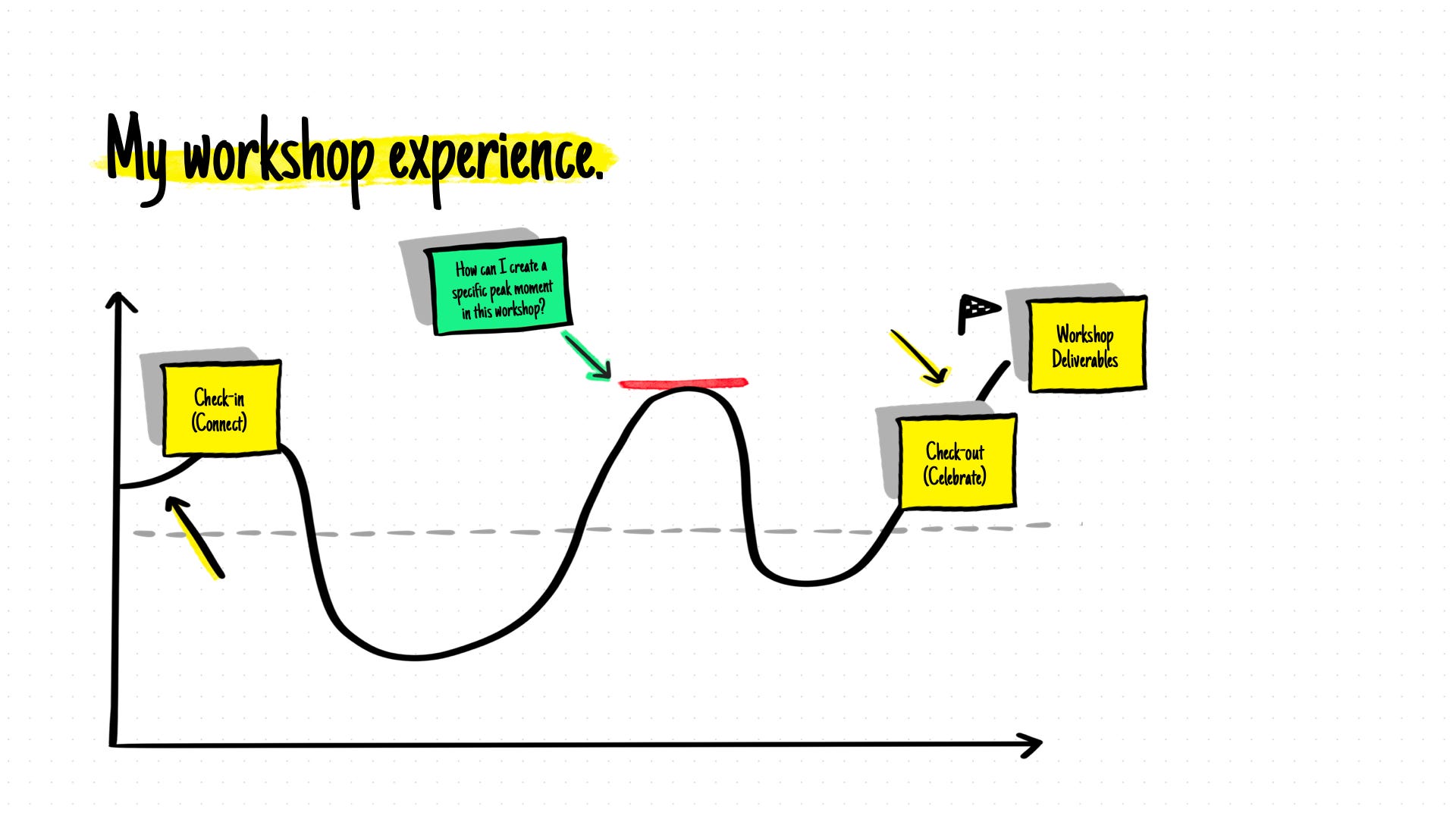
So design for the beginning, the end, and at least one peak.
This is why I spend real time on the room before anyone arrives. Clean it. Set the tables properly. Sharpies, notepads, colourful sticky notes, some sweets, name tags with my branding on them. I want people to walk in and immediately feel that today is not a normal meeting. When someone takes a photo of the setup before we start, I know the opening has landed.
Then do the same for the ending, and find your peak somewhere in the middle. Music. Food. A surprise guest. Ice creams on a hot afternoon. It does not have to be expensive, it has to be unexpected.
5. The Comedy Bible

Now the ones you were not expecting.
I did not read this for work. I was learning stand-up, and when I want a new skill I buy a book. But I came out of it with two techniques I use in almost every session.
First, the reason humour matters at all. It is good for a room, and there is research to back that up, but that is not why I use it. I use it because I like making jokes and I like laughing, and a session where people laugh is a session people want to be in. Your style should be yours. This one is mine.
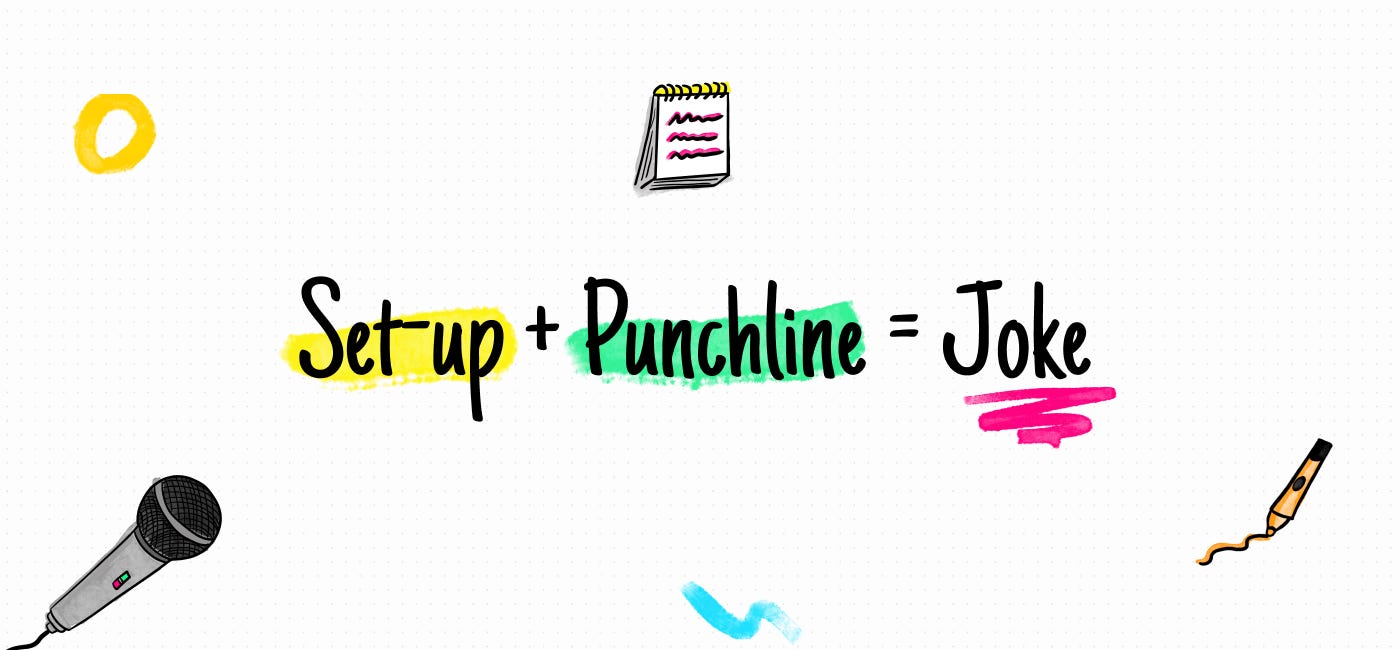
The structure of a joke is a set-up, an angle, and a punchline. Useful to know. But you do not need to be funny to use these two:
The callback. You pick up something from earlier in the day and bring it back later. I get most of mine from the warm-up. I run one called "my worst job", where people share the worst job they ever had and what they learned from it. Someone says McDonald's, and something happened with a customer. Two hours later, when we are talking about something else entirely, I bring it back.
The joke does not have to be good. That is the strange part. The connection itself is what works, and it does something else too: it tells the room you were actually listening.
The act-out. Instead of describing the funny situation, you perform it. Voice, face, gestures. A tiny piece of theatre inside the story. Badly done it still gets a laugh, which is fortunate for me.
One more thing I learned from stand-up: keep the jokes that work. If something lands unplanned, remember it and try it again in the next session. If it lands twice, it goes in the toolkit.
Yes, that means I reuse jokes. It also means I know they work. Same principle produced the Workshop Deck, incidentally: activities that kept working across different groups and different companies, kept and reused until I stopped wondering whether they would hold up.
Bonus: Grit
I said five, so treat this as the extra one.
Angela Duckworth studied a lot of successful people and found they had one thing in common: grit, which she defines as passion plus perseverance. Loving the craft, and being willing to do the unglamorous work of getting good at it.
The part I use is deliberate practice.
I once managed a team of fifteen people running workshops. Most of them wanted to get better. None of them had a plan for it, and neither did I. We just kept running workshops and hoping.
Deliberate practice means picking one thing and working on it on purpose:
Choose the specific skill before you design the session. Say it is giving clearer instructions. Then build for it: a formula, a worked example, the wording written out on paper so it is unambiguous.
Hold it as your goal in the room. Not the whole workshop, that one thing. You deliver differently when you are watching for it.
Get feedback straight afterwards. With a co-facilitator, debrief that specific point, not just the day. Alone, ask the honest questions: was it clear, did people hesitate, did anyone have to ask again?
Repeat that a few times and the skill actually moves. Without it, you have ten years of experience that is really the same year ten times.
Find your own list
These books made me better. Some of them fit my style and the kind of sessions I run, which is the point.
Two of them are not about facilitation at all. That is not a coincidence. Most of what makes a workshop good comes from somewhere else: how experiences are designed, how creativity works, how a room responds to being made to laugh.
So find your own style first, then go looking for the things that sharpen it. Your list should not look like mine.