When workshop design becomes procrastination
I have asked more than 400 facilitators how long they spend designing an outcome driven workshop. Most of that time never reaches the room.


A facilitator on my call this week told me his workshops take months to design. Months. Heavily custom, mixed with training.
By the time he walks into the room, he has had more meetings with that client than most people have in a quarter.
He knows it is too much. His wife tells him regularly, and wives are always right.
He just does not know where to cut.
I know this problem. That was me, for years.
This is not a rare problem
I have asked more than 400 facilitators how long they spend designing an outcome driven workshop. The kind where the team has to build something real by the end, align on priorities, land a strategy.
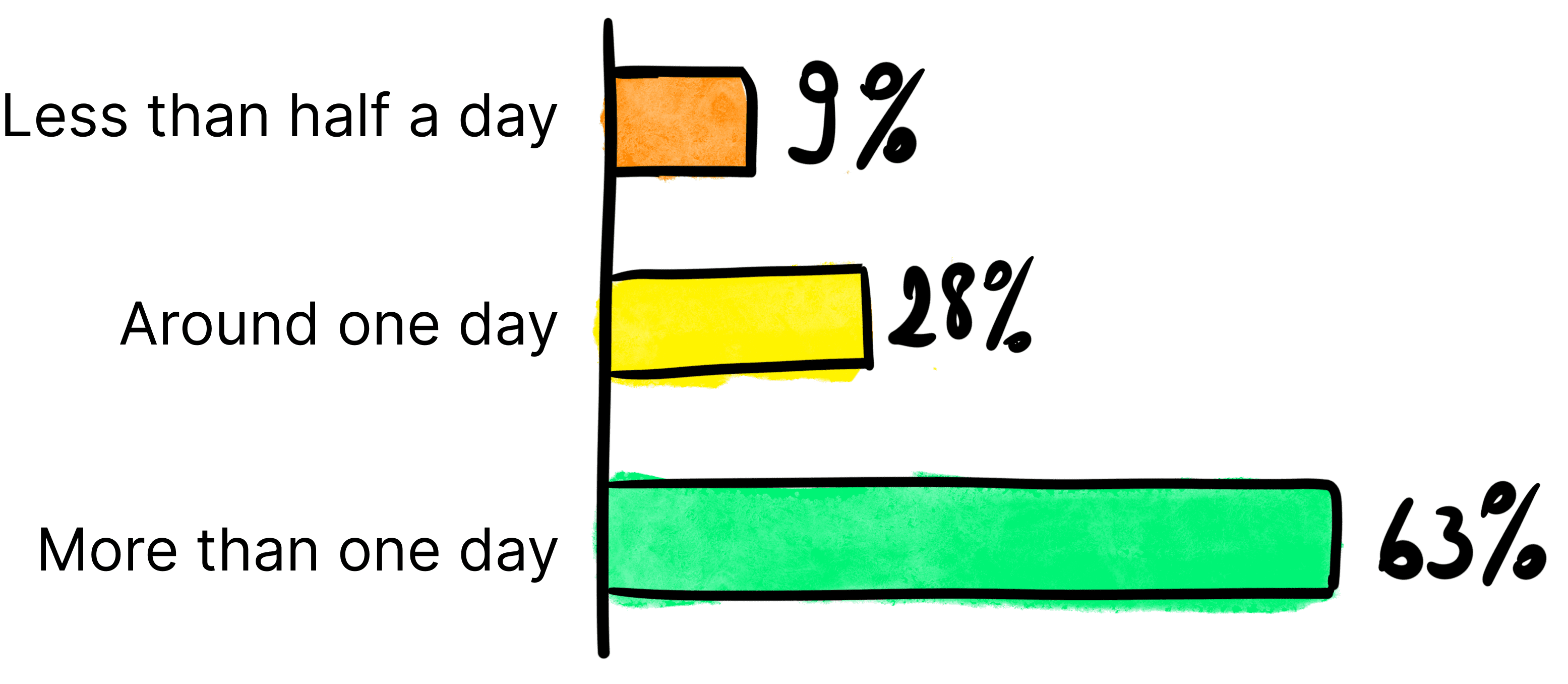
My honest benchmark? One to two hours. Three at the absolute most.
Preparing the content of a workshop or a training is a different job. That one genuinely takes longer. But designing the flow? Choosing the activities, sequencing them so they deliver? That is a two hour piece of work.
Why we keep working anyway
Here is the belief underneath all of it. More hours means more chance it works. It sounds reasonable. And it is true, but only for the first two hours.
After that, each extra hour still makes your agenda a little better. Then a little less. Then so little that nobody in the room can feel the difference.
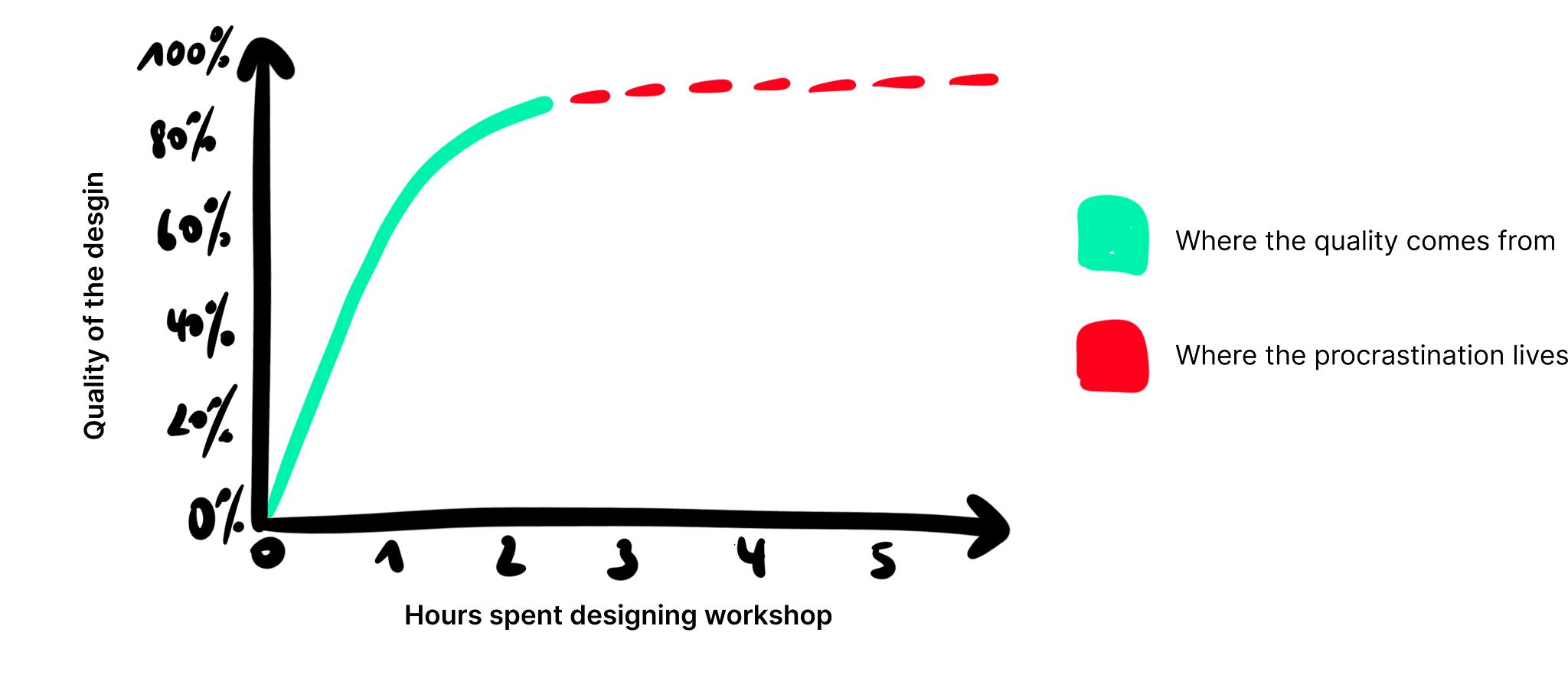
This is why it is so hard to stop. You are still working. You are still improving something. It has simply stopped being an improvement worth paying for.
So why do we keep going?
Because it is FUN.
That is the real answer, and it took me a long time to accept it. We did not become facilitators by accident.
We chose this job because we like this exact part: thinking, choosing, putting the pieces in the right order until the agenda feels right.
It is the nicest task on my list. And the nicest task on the list always grows.
I would rather spend Tuesday afternoon designing a session than writing emails to possible clients. Every time.
But which one did my business actually need that afternoon?
Working too long on your design is procrastination that looks like work. Nobody will ever criticise you for it, including yourself.
Your preparation is the only thing you control. Not the room. Not the mood of the team. Not whether the sponsor arrives tired and stressed from his previous meeting. So all your worry goes to the one place where it can go.
And an empty week has to be filled with something. If you work for yourself, you know this one. Designing feels more like real work than admitting that there is no work. So a quiet calendar slowly fills up with redesign.
Why you never know when you are finished
There is a second reason, and this one is easier to fix. You keep working because you have no way to know that you are finished.
Ask yourself now: is my next workshop design ready? If you cannot answer, it is usually not because the design is weak. It is because you never decided what "ready" means.
Three questions. You need a real answer to each one.
What does the client need to leave with?
Why are they running this session, and why now?
What is the goal of the day, in one sentence?
With those answers, you can judge your agenda. You look at it and you see whether it gets there. You are finished, or you are not, and you know which.
Without them, you have nothing to measure. So you keep adding. You keep looking for a better activity. You keep changing small details.
Not because the design needs it, but because you have no way to stop. This is not a discipline problem. It is a missing brief.
Sometimes the problem is not you
One more cause, because I see it very often. Your client is too involved. They question every choice. They want to see every detail. And the scope changes again after each conversation.
Every change means another redesign. You reach eight hours not because you are slow, but because you have designed the same workshop four times. That is not being thorough. That is a missing boundary.
Agree on the outcome before you design anything. If the scope changes, say clearly that this changes the design too. Treat it as a new conversation, not a small edit. You are allowed to protect your process. That is what they hired you for.
The difficult part
If a workshop takes you months to design, the real problem is not your process. It is your business. You cannot earn a living that way.
And here is the hardest part. Your client cannot see the difference. They cannot tell the eight hour version from the two hour version. They can only tell whether they got what they came for.
So, how long did your last workshop take to design? And how much of that time do you think really reached the room?